A dark spot can appear overnight, but its biology often started earlier. The key question is not only what causes sudden dark spots on face, but what changed beneath the surface. Common triggers include recent acne, insect bites, eczema, shaving irritation, sun exposure, hormonal shifts, and some medicines. Inflammation can stimulate melanocytes, leaving brown or gray pigment after the original redness disappears. It may look sudden. The process is not always sudden.
The American Academy of Dermatology identifies post-inflammatory hyperpigmentation and melasma as frequent causes of facial discoloration. Its clinical guidance also emphasizes daily broad-spectrum sunscreen, because ultraviolet exposure can deepen existing pigment. This is practical, not cosmetic. A window-side desk, a car commute, or unprotected midday walking can repeatedly reactivate dark patches. Recent WHO and IARC GLOBOCAN 2022 data recorded approximately 332,000 new melanoma cases worldwide. That figure does not mean every dark spot is cancer. It does mean unfamiliar changes deserve attention.
A useful warning: appearance alone can mislead. A dermatologist may examine a spot with dermoscopy, review medications, and compare earlier photographs. Seek medical evaluation if a mark grows, bleeds, becomes painful, develops uneven borders, or changes in color. Do not aggressively scrub it. Irritation may create more pigment. Home observations are helpful, but they are not a diagnosis. Even careful explanations have limits, especially when a “sudden” spot has no obvious trigger. This guide explores likely causes, visible clues, and safer next steps, while acknowledging that individual skin history changes the answer.
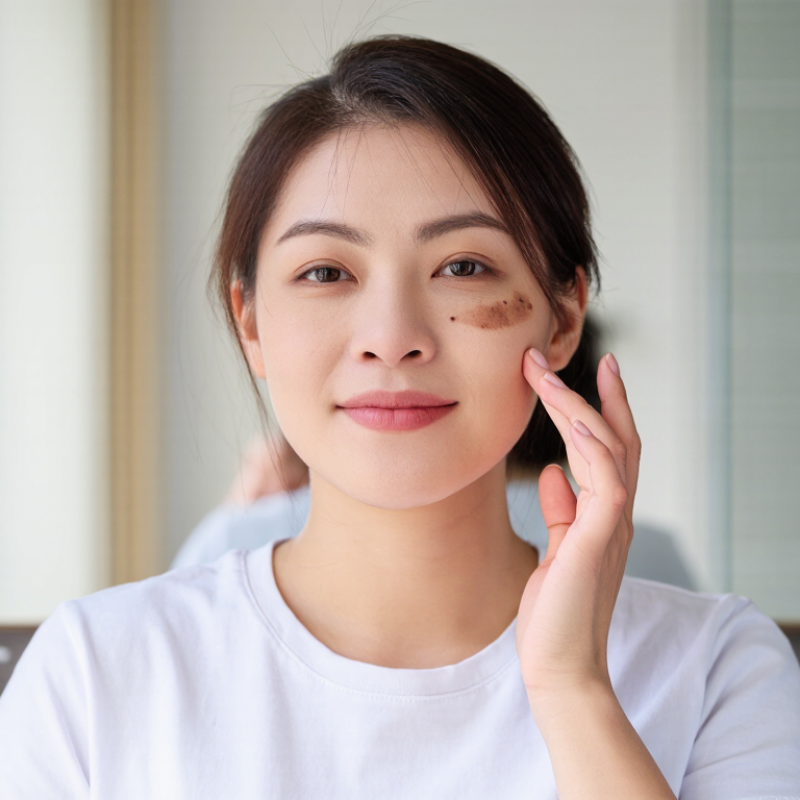
A sudden dark spot may look like a flat brown, gray, or nearly black mark on the skin. It can resemble a small freckle, a smudge, or a larger uneven patch. Some spots have clear borders, while others fade gradually into nearby skin. Their color may look different under warm bathroom light or daylight.
Look closely at texture and pattern. A harmless-looking mark is often flat and evenly colored, but this is not a guarantee. Post-inflammatory pigmentation can appear after acne, a scratch, or irritation, leaving a brown shadow where inflammation healed. Sun exposure may create several small spots across the cheeks, forehead, or nose. Hormonal pigmentation often forms broader, symmetrical patches.
Not every sudden mark is pigmentation. A bruise may shift from purple to brown before disappearing. A changing mole can become darker, larger, uneven, itchy, or prone to bleeding. Watch for an irregular outline or several different colors within one spot. Take a clear photograph beside a ruler, using natural light, and compare it after a few weeks. I know this method is imperfect, but it can reveal subtle changes. Avoid harsh scrubbing while observing it. Seek medical assessment if the mark changes quickly, persists without an obvious cause, or looks unlike your other spots. A dermatologist can examine it with magnification and decide whether testing is needed.
Sudden dark spots can have several everyday causes. The most common is post-inflammatory hyperpigmentation after acne, insect bites, cuts, or irritated skin. A small blemish may heal, but leave a brown mark behind. Sun exposure can make these spots darker, even on cloudy days.
Hormonal changes may trigger melasma, especially during pregnancy or while using hormonal medicine. It often appears as uneven patches on the cheeks, forehead, or upper lip. Some skin-care products can also cause irritation and lingering discoloration. It is easy to blame one new product, but several causes may overlap. Certain medicines and medical conditions can also change skin color, so a clinician should review persistent or unusual changes.
Tips: Use broad-spectrum sunscreen daily and reapply outdoors. Avoid picking spots or scrubbing them harshly. Introduce new products slowly, and stop using anything that causes burning. Take a clear photo each month to track changes. Seek professional advice if a spot grows quickly, develops uneven borders, changes color, bleeds, itches persistently, or looks different from nearby marks. A dermatologist can examine the area closely and decide whether testing is needed.
Dark spots can seem to appear overnight, but skin changes usually develop beneath the surface first. Ultraviolet exposure stimulates melanocytes, the cells that produce melanin. Acne, shaving, eczema, or a small burn can add inflammation. The healing process may leave extra pigment behind. This is called post-inflammatory hyperpigmentation, or PIH. The word “sudden” can mislead.
Melasma follows a different pattern. Hormonal shifts, heat, visible light, and ultraviolet exposure may activate pigment across the cheeks, forehead, or upper lip. A review in the International Journal of Women’s Dermatology reports that melasma can affect up to 50% of women in some high-risk populations. That figure is not a personal diagnosis.
Skin tone, genetics, pregnancy history, and daily exposure all change risk. A 2022 review in the Journal of Clinical and Aesthetic Dermatology also describes PIH as especially persistent in darker phototypes. It can fade slowly.
Look closely at timing. A spot after a pimple suggests PIH; a symmetrical, mask-like patch suggests melasma. Still, appearances overlap. A dermatologist should assess a new, changing, bleeding, painful, or irregular mark. Not every dark spot is harmless pigment.
Daily broad-spectrum protection, shade, and gentle skin care can reduce ongoing stimulation. Harsh scrubs may worsen inflammation. I would not promise quick results. Pigment often needs months, and treatment depends on the trigger, skin tone, and medical history. Evidence is useful, but individual skin can be stubborn.
Why Do Sudden Dark Spots Appear on Your Face?
Sudden dark spots can follow sun exposure, acne, skin irritation, or hormonal changes. Some appear after a pimple heals, leaving brown pigment behind. Certain medicines may also increase sun sensitivity. It is tempting to blame every new mark on aging. That shortcut can mislead. A spot that changes quickly deserves closer attention, especially when its cause is unclear.
Seek medical advice if a mark grows, develops uneven edges, or shows several colors. Bleeding, crusting, persistent itching, or pain also matters. A dermatologist may examine the area with magnification and recommend a biopsy when necessary. These signs do not prove cancer, but delaying an assessment is unwise. People with many moles, previous skin cancer, or heavy sun exposure should arrange checks more carefully.
Tips: Photograph the spot beside a ruler and record the date. Do not scratch it or apply harsh lightening products. Use broad-spectrum sun protection and reapply it outdoors. Bring a list of medicines and recent skincare changes to your appointment. Not every spot has a neat explanation, and that uncertainty is precisely why professional evaluation helps.
| Possible Cause | Typical Appearance | Common Triggers or Clues | Usual Timing | When to Seek Medical Attention | General Next Step |
|---|---|---|---|---|---|
| Post-inflammatory hyperpigmentation | Flat brown, gray-brown, or darker marks at the site of a previous blemish, rash, cut, burn, or irritation. | Recent acne, picking, shaving irritation, eczema, allergic contact dermatitis, or a cosmetic procedure. | Often becomes noticeable after the inflammation improves; fading may take months. | Arrange an evaluation if the area continues to inflame, becomes painful, spreads quickly, or does not improve after the original problem resolves. | Stop irritating products, avoid picking, and use broad-spectrum sun protection. Treat the underlying skin condition with professional guidance. |
| Melasma | Usually symmetric light-to-dark brown patches on the cheeks, forehead, nose, or upper lip. | Sun exposure, visible light, pregnancy-related hormonal changes, or hormonal medication may contribute. | Usually develops gradually, although it may appear more noticeable over a short period after increased sun exposure. | Seek care if the pattern is unusual, one-sided, rapidly changing, or uncertain, because other conditions can look similar. | Use consistent broad-spectrum sunscreen and seek a clinician’s advice before using pigment-lightening treatments. |
| Sun-induced lentigines | Well-defined tan, brown, or dark flat spots, commonly on sun-exposed facial skin. | Long-term ultraviolet exposure; spots may become more visible after sunny periods. | Usually develops gradually and persists rather than appearing and disappearing. | Have a spot checked if it changes in size, shape, color, or surface, or if it becomes itchy, tender, crusted, or bleeds. | Protect the skin from ultraviolet exposure and have new or changing lesions examined. |
| Bruise or purpura | Red-purple, blue, brown, or yellow discoloration that may change color as it heals; it can be flat or slightly swollen. | Minor trauma, pressure, injections, blood-thinning medicines, fragile skin, or a bleeding tendency. | Often appears within hours to days and generally changes or fades over one to three weeks. | Seek prompt care for unexplained or frequent bruising, many new spots, nosebleeds, bleeding gums, blood in urine or stool, severe headache, or weakness. | Record when it appeared and review medicines and supplements with a healthcare professional. Do not stop prescribed medicine without advice. |
| Petechiae or purpura from bleeding under the skin | Multiple tiny red, purple, or dark spots that usually do not fade when pressed. | Infection, low platelet levels, blood-vessel inflammation, medication effects, or other blood disorders. | May appear suddenly and can spread. | Obtain urgent medical assessment if spots spread rapidly or occur with fever, neck stiffness, confusion, breathing difficulty, severe illness, or unusual bleeding. | Do not rely on appearance alone; a clinician may need to examine the skin and perform blood tests. |
| Medication- or product-related pigmentation | Diffuse darkening or sharply outlined brown-gray patches in areas exposed to a medicine, cosmetic, or sunlight. | New medicine, supplement, fragrance, hair product, peel, or topical treatment; some reactions are worsened by ultraviolet exposure. | May develop over days to months, depending on the trigger. | Seek care if there is blistering, facial swelling, eye or mouth involvement, widespread rash, breathing difficulty, or rapid progression. | Stop a suspected nonessential irritant and seek professional advice. Do not discontinue an essential prescription without medical guidance. |
| Allergic or irritant contact dermatitis followed by darkening | Dark marks with recent redness, itching, burning, scaling, or swelling. | New cosmetics, fragrances, hair dyes, skincare ingredients, masks, or repeated friction. | Symptoms may begin within hours to several days; pigmentation can remain after the rash settles. | Get medical help for facial swelling, eye involvement, blistering, extensive rash, or symptoms that persist after avoiding the suspected product. | Discontinue the suspected product, cleanse gently, and obtain advice about safe treatment for the inflammation. |
| Atypical mole or skin cancer | A new or changing spot with asymmetry, irregular borders, multiple colors, increasing diameter, or a different appearance from other moles. | Personal or family history of skin cancer, significant ultraviolet exposure, or a new lesion in adulthood. | May change over weeks or months; some concerning lesions can be small. | Arrange prompt dermatologic assessment for a spot that changes, itches persistently, hurts, crusts, bleeds, fails to heal, or develops a firm raised area. | Do not remove or burn the lesion at home. Photograph it with a measurement reference and arrange a professional skin examination. |
| Systemic illness with facial darkening | More generalized or symmetric darkening, sometimes involving skin folds, scars, lips, or the inside of the mouth. | May occur with fatigue, dizziness, weight change, abdominal symptoms, weakness, or changes in blood pressure, depending on the condition. | Usually develops over time, but symptoms may become noticeable suddenly. | Seek urgent care for severe weakness, fainting, confusion, persistent vomiting, dehydration, or rapidly worsening symptoms. | Arrange a medical evaluation rather than treating the pigmentation alone; underlying causes may require examination and laboratory testing. |
Sudden facial dark spots deserve a careful assessment, not an automatic whitening routine. A clinician records their timing, growth, itching, bleeding, sun exposure, medications, pregnancy status, and previous inflammation. Melasma, post-inflammatory hyperpigmentation, solar lentigines, actinic keratoses, and melanoma can look surprisingly similar. Photos can mislead.
Dermatologists examine colour, borders, symmetry, and surface texture, often using dermoscopy for deeper visual clues. A Wood’s lamp may help estimate pigment depth, but it cannot confirm every diagnosis. If a spot changes quickly, feels rough, bleeds, or appears distinctly different, a biopsy may be appropriate. The IARC GLOBOCAN 2022 report estimated 331,722 new melanoma cases worldwide, showing why suspicious pigmentation should not be dismissed.
Management depends on the cause. Daily broad-spectrum sunscreen, protective clothing, and shade help reduce ultraviolet-driven darkening. For melasma or post-inflammatory marks, clinicians may consider prescription pigment-regulating treatments, retinoids, or carefully selected procedures. Irritating products can worsen pigmentation, especially on darker skin tones. Slow improvement is common. It is not always failure.
The American Academy of Dermatology advises professional evaluation before treating an unexplained changing lesion. That caution matters because cosmetic treatment can temporarily alter a spot and delay diagnosis. Follow-up photographs, taken under similar lighting, can reveal gradual changes that a mirror hides. Calibration is imperfect, but observation becomes more useful with consistent records.
It may look like a flat brown, gray, or nearly black mark. It can resemble a freckle, smudge, or uneven patch. Some borders look sharp. Others fade into nearby skin.
Healing skin may produce extra pigment after inflammation. This can happen after acne, shaving, scratches, eczema, or small burns. The remaining mark is called post-inflammatory hyperpigmentation. It may fade slowly.
Yes. Ultraviolet exposure can stimulate pigment-producing skin cells. Small spots may appear across the cheeks, forehead, or nose. Daily protection and shade can reduce continued stimulation. Results are not immediate.
A mask-like patch across the cheeks, forehead, or upper lip may suggest melasma. Hormonal changes, heat, visible light, and ultraviolet exposure may contribute. Its appearance can overlap with other conditions. Looks can mislead.
Yes. A bruise may change from purple to brown before disappearing. Its color should gradually improve. A mark that remains or changes strangely deserves attention.
Seek medical advice if it grows, darkens quickly, or develops uneven edges. Several colors, bleeding, crusting, itching, or pain also matter. These signs do not prove a serious disease. Delay is still unwise.
Photograph it beside a ruler in natural light. Record the date and compare photographs after several weeks. Check its size, shape, color, and texture. This method is imperfect.
Avoid scratching, harsh scrubbing, and aggressive lightening products. I would not promise quick fading. Pigment may need months to improve. Bring recent skincare changes and medicine details to an appointment.
Sudden dark spots on the face can appear as small brown, gray, or unevenly colored patches, sometimes developing over a few days or weeks. Understanding what causes sudden dark spots on face often begins with common triggers such as sun exposure, inflammation after acne or irritation, hormonal changes, skin injuries, or reactions to certain products or medications. These triggers may stimulate excess melanin production, causing areas of the skin to become darker than the surrounding complexion. Changes can be more noticeable in people with deeper skin tones, but they can affect anyone.
Most facial dark spots are harmless, especially when they gradually fade after the trigger is removed and the skin is protected from sunlight. However, a spot that changes quickly in size, shape, color, or texture, bleeds, itches persistently, or looks very different from others should be evaluated by a healthcare professional. Assessment may include a detailed skin history and visual examination, while management can involve avoiding irritants, practicing consistent sun protection, treating underlying inflammation, and using suitable professional or topical approaches when recommended.

Menuka Medical