When to Apply Vitamin C in Your Skincare Routine?

Time:2026-10-02 Author:Sophia
0%

Vitamin C has moved from a specialist ingredient to a daily skincare essential. Grand View Research valued the global skincare products market at approximately $155.7 billion in 2023, showing how strongly consumers invest in evidence-informed routines. Yet popularity can create confusion. Many readers still ask, “when to apply vitamin c in skincare routine,” especially when using retinol, exfoliating acids, or sunscreen.

Dermatologist Dr. Dendy Engelman explains, “Vitamin C is a powerful antioxidant that can neutralize free radicals and help protect the skin from environmental stressors.” This statement supports a practical morning routine, when vitamin C can complement broad-spectrum sunscreen. It does not replace sunscreen. That distinction matters.

The American Academy of Dermatology recommends daily broad-spectrum sunscreen with SPF 30 or higher. Vitamin C may support brighter-looking skin and help reduce the appearance of uneven tone, but results depend on formulation, stability, concentration, and consistent use. A brown or strongly oxidized serum may be less reliable. Packaging matters, too.

A useful routine is simple: cleanse, apply vitamin C, moisturize, then use sunscreen. Start slowly if your skin feels sensitive. Not every product suits everyone.

The evidence is promising, but not perfect. Some marketing claims move faster than clinical research. This guide will examine timing, layering, concentration, storage, and common mistakes. It will also separate dermatologist-backed advice from attractive but unsupported skincare promises.
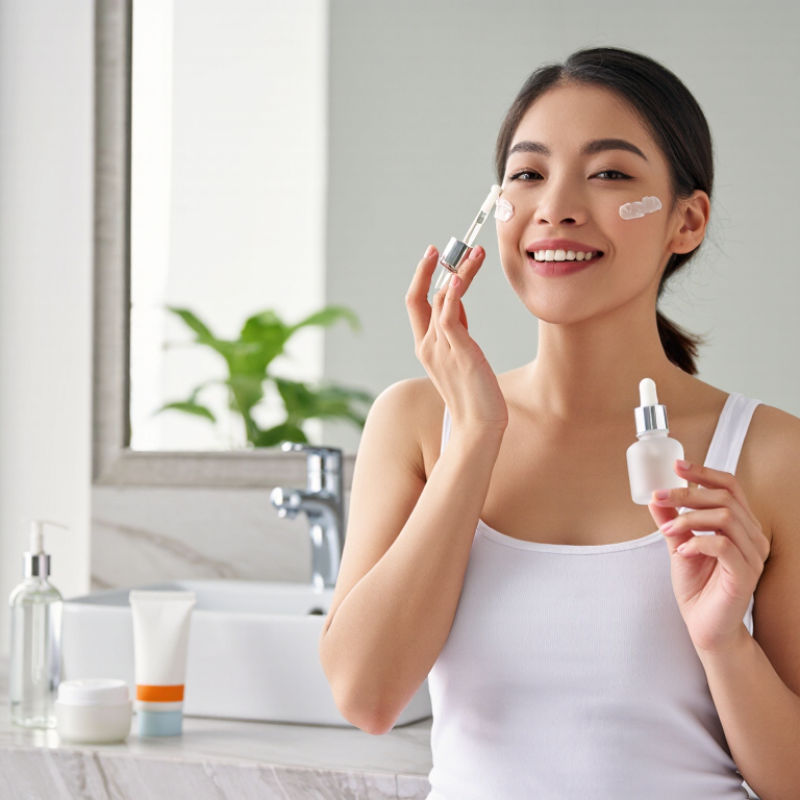
When to Apply Vitamin C in Your Skincare Routine?

Determine Morning Timing: Vitamin C Complements Broad-Spectrum SPF 30+

When to Apply Vitamin C in Your Skincare Routine?

Morning application is often practical because vitamin C can support your daily antioxidant defense. It may help reduce oxidative stress caused by environmental exposure. However, it does not replace sunscreen. A broad-spectrum SPF 30 or higher remains essential for protecting skin from ultraviolet radiation.

Cleanse gently, then pat your face dry. Apply a thin layer of vitamin C before moisturizer. Let it settle briefly if your skin feels comfortable. Follow with a generous, even layer of broad-spectrum SPF 30+. Cover your ears, neck, and hairline too. These areas are easy to miss. Reapply sunscreen during extended outdoor exposure, especially after sweating or swimming.

More is not always better. Higher concentrations may increase stinging, dryness, or redness. Sensitive skin may tolerate vitamin C better every other morning. Patch-test a small area first, and stop if persistent irritation appears. The exact timing is not magical. Product texture, climate, and skin condition can change the routine. I would also question any claim promising instant brightness. Visible changes usually require consistent use and realistic expectations. Layering several active ingredients can make the result harder to understand. If irritation continues, a qualified dermatologist can help identify the cause.

Select Evidence-Based Strengths: 5–20% Topical L-Ascorbic Acid

When to Apply Vitamin C in Your Skincare Routine?

Select Evidence-Based Strengths: 5–20% Topical L-Ascorbic Acid

Topical L-ascorbic acid works best when applied to clean, dry skin. Many clinical formulations use concentrations between 5% and 20%. Around 5% may suit sensitive beginners, while 10–15% often offers a practical balance between effectiveness and comfort. Higher strengths can provide stronger antioxidant activity, but they may also cause stinging, redness, or dryness.

Start gently.

Apply a few drops after cleansing and before moisturizer. Morning use is common because vitamin C can support daily antioxidant protection alongside broad-spectrum sunscreen. It does not replace sunscreen. Evening application is also reasonable, especially if morning layering feels heavy or irritating. Wait briefly before applying moisturizer if the product feels wet or tacky.

Concentration is not the whole formula. L-ascorbic acid usually needs an acidic environment, often near pH 3.5, for effective skin penetration. Stability matters too. Store the product away from heat, sunlight, and repeated air exposure. A clear or pale solution may gradually turn yellow, but deep amber color can suggest oxidation.

The evidence is not perfectly uniform.

Patch test first, particularly with 15–20% products. If burning persists, reduce frequency or choose a lower strength. I would not assume stronger means better; consistent use often matters more than chasing the highest percentage.

When to Apply Vitamin C in Your Skincare Routine?

Select evidence-based strengths: 5–20% topical L-ascorbic acid

Topical L-ascorbic acid has been studied across approximately 5–20% concentrations. A higher percentage is not automatically more effective: formulation stability, skin tolerance, packaging, and an acidic pH are also important. Apply vitamin C after cleansing and before moisturizer and sunscreen, usually in the morning.

The chart shows concentration options reported in clinical and formulation literature; it does not represent a direct efficacy ranking. References: Pullar JM, Carr AC, Vissers MCM. Nutrients. 2017;9(8):866. Pinnell SR et al. Dermatologic Surgery. 2001;27(2):137–142.

Apply After Cleansing: Keep L-Ascorbic Acid Near pH 3.5

Apply vitamin C after cleansing, when your skin is free from oil, sunscreen, and daily residue. L-ascorbic acid works best in an acidic environment, usually near pH 3.5. A clinical absorption study by Pinnell and colleagues found that a 15% L-ascorbic acid formula penetrated skin more effectively at pH 3.5 or below. That number matters. Higher pH formulas may feel gentler, but they can reduce absorption. After washing, pat your face dry and wait briefly if stinging is common. Apply a few drops before moisturizer and sunscreen.

Do not layer it over a thick cream. That can dilute the contact with skin. Cosmetic formulation reviews commonly place effective topical vitamin C between 10% and 20%, while higher strengths may increase irritation without delivering better visible results. The Cosmetic Ingredient Review Expert Panel has also assessed vitamin C ingredients as safe in cosmetic use when properly formulated. Still, product labels do not always reveal the exact pH. A pH test strip can offer clues, though it is not perfectly precise. Real skin is unpredictable. I would patch-test first, especially around the nose and mouth. Mild tingling may occur, but persistent burning, swelling, or redness signals a need to rinse and stop. Morning use is practical because vitamin C can support sunscreen’s protective routine, not replace it.

When to Apply Vitamin C in Your Skincare Routine? - Apply After Cleansing: Keep L-Ascorbic Acid Near pH 3.5

Routine Dimension Recommended Practice Evidence-Based Detail Practical Note
Best application step Apply after cleansing and before moisturizer and sunscreen. A clean, dry or lightly patted-dry face helps place the leave-on serum directly on the skin without being diluted by a cleanser or occlusive product. Use a gentle cleanser first, then apply a small amount of serum.
Form of vitamin C L-ascorbic acid (LAA) LAA is the direct antioxidant form of vitamin C, but it is more sensitive to oxygen, light, heat, and unsuitable pH than many derivatives. Check the ingredient list and product instructions before use.
Formulation pH Keep LAA near pH 3.5 when the formula is designed for acidic use. LAA is commonly formulated at an acidic pH, often around 2.5–3.5, to support its uncharged form and skin penetration. Do not add household acids or alkaline ingredients to change the product’s pH.
Order after cleansing Cleanser → LAA serum → moisturizer → broad-spectrum sunscreen. Layering from thinner, water-based products to thicker products generally supports even application. Allow each layer to settle briefly if pilling occurs.
Morning or evening Morning use is practical, especially when followed by sunscreen. Vitamin C provides antioxidant support, while sunscreen remains the primary protection against ultraviolet radiation. Applying it at night is also reasonable if morning use causes irritation or conflicts with other products.
Sunscreen pairing Finish the morning routine with broad-spectrum sunscreen. Vitamin C does not replace sunscreen; sunscreen helps reduce ultraviolet exposure that contributes to premature skin aging and uneven pigmentation. Reapply sunscreen as directed, particularly during extended outdoor exposure.
Starting frequency Begin every other day, then increase if well tolerated. Acidic LAA formulas may cause temporary stinging, dryness, redness, or irritation, especially for sensitive skin. Reduce frequency or stop if persistent irritation develops.
Product stability Store tightly closed in a cool, dark place according to the product directions. LAA can oxidize when exposed to air, light, and heat; oxidation may reduce effectiveness and change the product’s color. Discard the product if it has a strong off-odor or a pronounced dark yellow, orange, or brown change unless the instructions state otherwise.
Patch testing Test a small area before applying it broadly. Patch testing can help identify irritation or sensitivity, although it cannot guarantee that a full-face reaction will not occur. Avoid applying to broken, sunburned, or actively inflamed skin.
Combining active ingredients Introduce other strong actives gradually rather than adding several at once. Using multiple potentially irritating products together can increase dryness, stinging, and redness. Alternate application times when using exfoliating acids or retinoids if sensitivity occurs.
Expected timeline Assess results consistently over several weeks rather than after one application. Visible changes in uneven tone and overall skin appearance generally require regular use and appropriate sun protection. Stop using the product and seek professional advice if severe or persistent reactions occur.

Layer Strategically: Use Vitamin E and Ferulic Acid for Added Stability

Vitamin C usually fits best after cleansing and before moisturizer or sunscreen. I apply a few drops to dry skin in the morning. This timing supports antioxidant protection during daytime exposure. It does not replace broad-spectrum sunscreen.

The formula matters as much as the clock. Vitamin E can help support vitamin C’s antioxidant performance, while ferulic acid may improve the blend’s stability. Together, they create a more thoughtful antioxidant system. They do not make unstable products permanently effective. Look for an opaque, tightly sealed container. Store it away from heat and direct sunlight.

Watch the color. Clear or pale yellow serum often feels reassuring. A deep orange or brown change may suggest oxidation. I used to apply too much, thinking more would work faster. My skin became tight and irritated instead. Now I begin with a small amount every other morning. Patch testing remains sensible, especially with sensitive skin. A brief tingling can happen. Burning is different. Stop if redness persists, and seek professional advice when needed. Formulas vary, so product instructions deserve attention. My routine is still not perfect. Temperature, storage, and skin tolerance can change the result. Layer gently, allow the serum to settle, and avoid adding several strong actives at once.

Monitor Tolerance and Results: Review Skin Changes After 8–12 Weeks

When to Apply Vitamin C in Your Skincare Routine?

Apply vitamin C after cleansing and before moisturizer, preferably in the morning. Use sunscreen afterward, because ultraviolet exposure can undermine progress. Start two or three mornings weekly. A lower frequency is often wiser than chasing dramatic results.

Monitor your skin for 8–12 weeks. This period allows gradual changes in dullness, uneven tone, and post-blemish marks to become easier to judge. The 2017 review in Nutrients reported that topical vitamin C commonly performs well around 10–20% concentration. Higher strengths showed no consistent extra benefit and may increase irritation. That finding matters when redness appears.

Keep a simple record. Photograph the same cheek near a window every four weeks. Note stinging, dryness, tightness, and new breakouts. A mild tingling sensation may occur, but persistent burning deserves a pause. The American Academy of Dermatology recommends testing a new skincare product on a small area for seven to ten days. Small steps help.

Results can be uneven. Skin tone may improve before fine texture changes. Sometimes, nothing obvious happens. That does not automatically mean the product failed; storage, formulation stability, sun exposure, and inconsistent use can interfere. I would also question overly perfect before-and-after images. Lighting changes easily mislead. Stop using the product if swelling, blistering, or severe itching develops, and seek professional medical advice.

FAQS

When should vitamin C be applied in a morning skincare routine?

Apply it after gentle cleansing and before moisturizer. Morning use is practical. Follow with broad-spectrum SPF 30 or higher.

Why is sunscreen still necessary with vitamin C?

Vitamin C does not replace sunscreen. SPF helps protect against ultraviolet radiation. Apply it evenly to your face, ears, neck, and hairline.

How should L-ascorbic acid be applied?

Pat clean skin dry. Apply a few drops before moisturizer. Avoid placing it over a thick cream.

What pH is suitable for L-ascorbic acid?

L-ascorbic acid often works best near pH 3.5 or below. Higher pH formulas may feel gentler. Absorption could be lower.

What vitamin C concentration is usually practical?

Cosmetic reviews commonly place effective formulas between 10% and 20%. Higher strengths may cause more dryness, stinging, or redness.

Can sensitive skin use vitamin C every morning?

Not always. Try every other morning first. Patch-test near the forearm or jawline before applying it widely.

Is mild tingling normal after applying vitamin C?

Mild tingling can happen briefly. Persistent burning, swelling, or redness means rinse the product and stop using it.

How long does vitamin C take to brighten the skin?

Visible changes usually require consistent use. Instant brightness claims deserve skepticism. Results vary with product quality, climate, and skin condition.

Can vitamin C be layered with several active ingredients?

Layering many actives may increase irritation and confuse the result. A simpler routine is easier to evaluate. Skin is unpredictable.

Should sunscreen be reapplied after outdoor activity?

Yes. Reapply during extended outdoor exposure, especially after sweating or swimming. Use a generous, even layer.

Conclusion

Understanding when to apply vitamin c in skincare routine can help maximize its benefits while minimizing irritation. Vitamin C is generally best used in the morning after cleansing, before moisturizer and broad-spectrum SPF 30 or higher. Choose an evidence-based concentration of 5–20% topical L-ascorbic acid, and apply it to clean, dry skin. Because L-ascorbic acid performs best in an acidic environment near pH 3.5, avoid immediately combining it with products that may significantly alter its effectiveness.

For improved stability and antioxidant support, consider pairing vitamin C with vitamin E and ferulic acid in a carefully formulated routine. Start gradually if your skin is sensitive, watching for dryness, redness, or stinging. Consistent use matters more than applying a high concentration, so adjust frequency according to your skin’s tolerance. Review changes in brightness, uneven tone, and overall texture after approximately 8–12 weeks to determine whether the routine is working well or needs refinement.

Sophia

Sophia

Sophia is a dedicated marketing professional with an exceptional depth of knowledge about her company's products and services. With a keen understanding of market trends and customer needs, she crafts insightful blog posts that not only inform but also engage readers, enriching the company’s online......